

MoodFlix
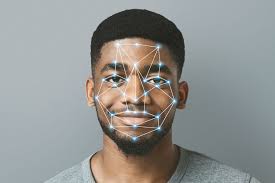
AI-powered movie recommendation system that analyses emotional state, voice tone, location, weather, and context to suggest personalised films using computer vision, audio analysis, and machine learning.
A collection of research projects spanning quantum finance, quantum chemistry, AI, and sustainable engineering.
My postgraduate focus at Oxford is quantum computation and quantum machine learning. The work below includes projects developed across academic research, industry, and hackathons.
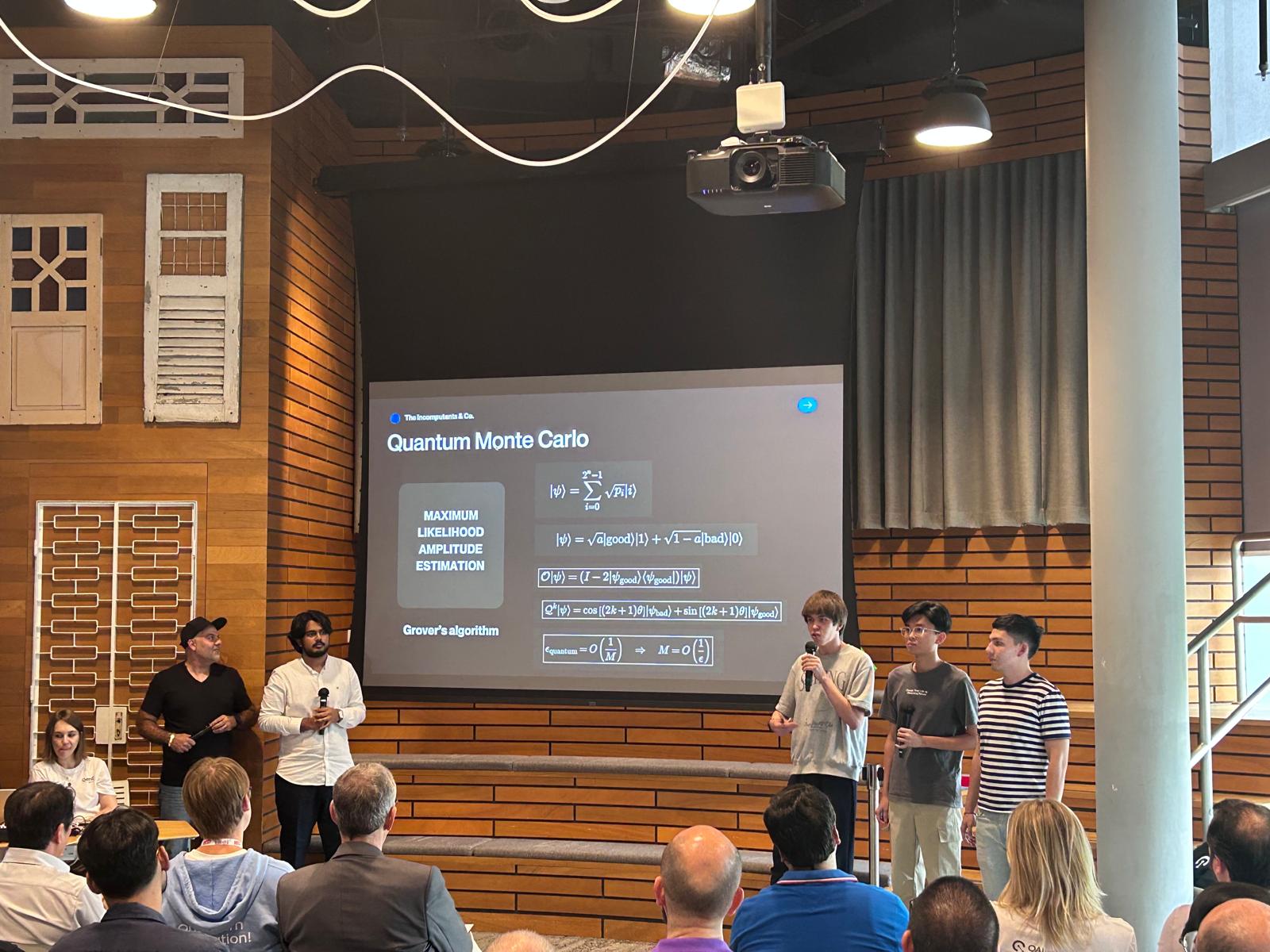
Quantum Monte Carlo simulations and Quantum Long-Short Term Memory models for option price forecasting, developed at QAI Ventures in Singapore. Algorithms were implemented and run on real quantum hardware. Also includes volatility prediction and portfolio PFE estimation with variance-reduced sampling and hybrid quantum-classical LSTM.
A hybrid photonic quantum reservoir computing (QRC) framework for swaption surface prediction. The pipeline compresses 224-dimensional surfaces to a 20-dimensional latent space via a sparse denoising autoencoder, extracts 1,215 Fock-basis features from an ensemble of three fixed photonic reservoirs, and maps the resulting feature vector to predictions with Ridge regression. Achieves the lowest surface RMSE of 0.0425 with sub-millisecond inference. The quantum layer has zero trainable parameters, sidestepping barren plateaus entirely.
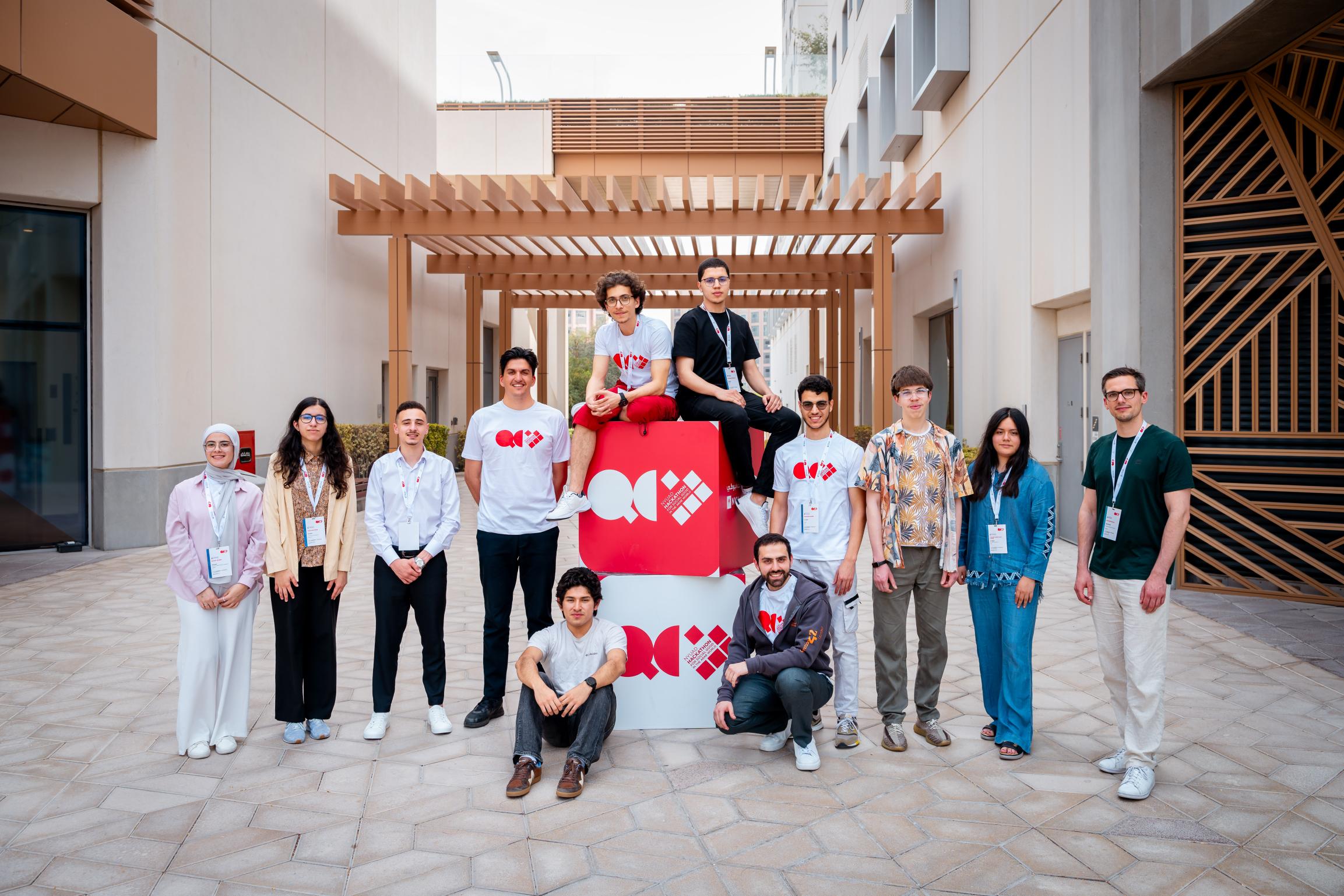
A platform that engineers and optimises energy grids using quantum computing for battery design and machine learning for resource allocation according to population demands. Employs Variational Quantum Eigensolvers (VQE) and Quantum Equation of Motion (QEOM) algorithms to extract energy spectra of molecules and analyse material properties under heat exposure. Fault-tolerance scaling up to 500k physical qubits using Microsoft's Resource Estimator. Related variational simulations of lithium-sulfur crystal structures received second place at the 2025 NYUAD Quantum Hackathon.
Systematic comparison of six leading quantum software tools — Qiskit, Cirq, PennyLane, Q#, Silq, and OpenQASM 3.0 — across usability, functionality, performance, and ecosystem maturity. Includes benchmark implementations of Bell State, Teleportation, Grover's Search, VQE, QAOA, Shor's Algorithm, and Hamiltonian Simulation across all frameworks.

Protocols on quantum graph states for system routing and networking, developed at Sejong University.

Research on transformer-based and LSTM-based approaches to quantum circuit optimisation.

Research on algorithms for distributed quantum machine learning, alongside work on quantum machine learning models and applications at Yonsei University.
Research on the categorical foundations of quantum computing, presented as a poster at the Swiss Research Station winter school. Uses category theory, monoidal categories, and functorial semantics to formalise quantum circuits and protocols.
Book · Education
An educational book that explains quantum computing and quantum physics concepts to kids and beginners using intuitive everyday analogies.
Book · Mathematics
A comprehensive guide covering the mathematical foundations needed for quantum computing — linear algebra, complex analysis, probability, group theory, and Hilbert spaces.
AI-powered movie recommendation system that analyses emotional state, voice tone, location, weather, and context to suggest personalised films using computer vision, audio analysis, and machine learning.
Collaboration with Huawei to recycle plastics into high-quality 3D printing materials. Integrates chemical engineering with computer vision for sorting plastics into categories. The project has achieved 30× returns.
AI · Startup
AI emotion tracking application using advanced computer vision for accurate inference of user feelings based on short facial mimic videos. Accepted into KOICA's Korean startup accelerator.